Jordan Harrison, an Indianapolis area woman, has a degree in advertising, but as she acknowledged in her short
bio at the Capture Indy project Web site, her true passion is photography.
"I like to take pictures of architecture, people, nature, animals, etc ... but enjoy architectural photos th

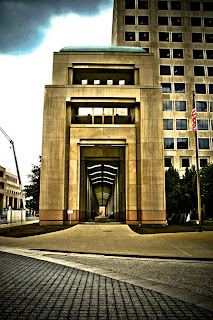
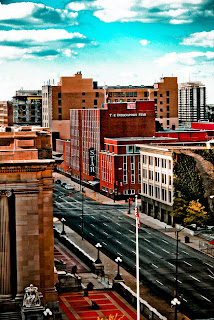
e most," she said. "I love to take a picture of a building that people might see on a regular basis, but tweak it to emphasize all the amazing details it's exterior and/or interior has to offer."
Jordan's work at
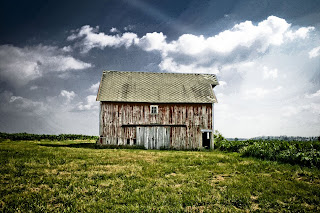
Capture Indy is distinguished by the inimitable look she gives many of her images -- the state capitol, farm buildings, points of interest. She tries to explain her technique in our interview for this month's "Photographer in the Spotlight," Jordan Harrison.
Jordan, how and when did you get into photography? What was it about photography that attracted you to it? Your degree is in advertising ... was there photography involved in your advertising studies in college that perhaps planted the seed?I started doing photography as a hobby back in college. It began with me taking pictures of my nieces and it didn't turn into anything more until a few years later after I graduated college.
I first became attracted to photography while working on ads in my advertising classes and later on in my advertising internship. I appreciated seeing how the photography could tell a story in order to sell the products for the ads.
It didn't take a professional route until about 2007 when my cousin and I decided to start doing senior pictures for people we knew and the rest is history. I still have a long way to go and a lot more to learn, but with every picture I take and every picture I edit my passion for it continues to grow.
Are there any prominent global, national or local photographers that you count among your favorites, or as inspiration?I wouldn't say that there is a particular photographer that comes to mind as my inspiration. However, it's not that I don't think that there are amazing photographers out there, because I think there is an endless amount of amazing talent when it comes to photography. I am just more inspired by the actual photos and the work that the artists put into it then a particular name. I am always inspired to get out and take new photos after browsing online and viewing other people's work.
What kind of equipment do you use in taking your pictures? Do you have a favorite lens? Did you delve much in film photography in the years preceding digital photography? If so, did you approach your work much the same? Did you ever do your o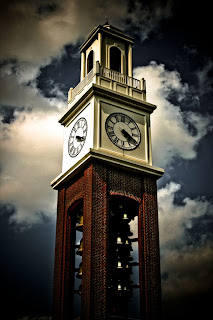 wn lab work?
I use a Canon Digital SLR Camera for taking my pictures. My favorite lens is my Canon telephoto 300mm because it is a great all-purpose lens due to its wide range from 71mm to 300mm.
I didn't delve into using film cameras because at the point where I became interested in photography, digital cameras were the advancement. Film cameras seemed too archaic. With digital, you get the instant preview of the photo, it's more cost-effective and allows for better editing, so using a digital camera seemed to be the best choice from the beginning.
What inspires you to take pictures, and/or what motivates you to pursue your craft?I am motivated to pursue my craft of photography because it's the thing I am most passionate about. I am inspired to take pictures because I love to create memories of the things I shoot or even bring about an old memory that someone might already have.
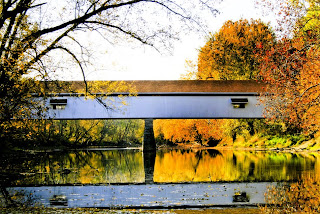
I often find that people will look at my pictures and remember a memory from their own past.
For example, at the local market where I sold, I remember a particular woman buying a picture set of the local covered bridge because her father used to take her there every weekend. I could tell how much seeing my photo meant to her and that's what makes me pick up the camera time and time again.
You favor buildings and architectures in your photography work. Do you have a special approach to either setting up or taking pictures of those subjects?I favor buildings and architecture the most because of all the details that encompass the structure or
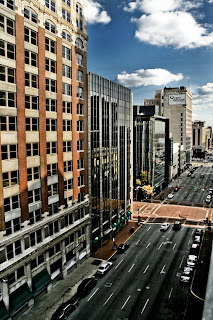
makeup of a building. I like to build on the details of the structure in order to tell the story of the subjects time and place. I give people the opportunity to see the beauty in things that they might pass by everyday and not take the time to notice. Plus, buildings are constantly posing without me having to tell them to look this way and smile.
Much of your photographic work is distinguished by its treatment in post-processing. It reminds me a bit of what I've seen of a lot of high-dynamic range (HDR) imagery, and if not, then something entailing a lot of layers and masks -- and some dodging and burning -- in Photoshop. Is what you do anything close to that? If not, can you give us an idea how you go about it?The post-processing that I primarily use tends to mimic the HDR filters that you can buy as an attachment to your camera. However, I tend to not use filters when I can have the original subject as it would look in real life as well as the HDR effect after post-processing.
I generally use Photoshop as my main editing program. In Photoshop, I will open my image and create different layers that I can adjust while having the ability to maintain the original with the hide and unhide option.

I tend to always use these three adjustment layers for beginning to edit a new photo. The first adjustment layer is "Color Balance" which includes tone balance for allowing tweaking of shadows, midtones and highlights. The second adjustment layer I use is "Brightness and Contrast" which has a wide range of different choices of color burns, dodging and luminosity. The third adjustment layer is "Hue/Saturation," which allows me to adjust the picture as a whole or select the different colors to adjust specifically.
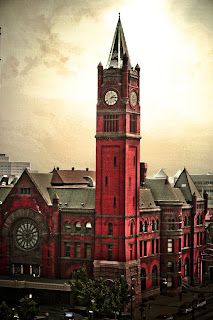
Each photo is different in the amount of extra processing needed. Some might need the exposure to be tweaked and some might just need a color balance to be fixed. I prefer to save all the edits I do as actions so that I am able to re-create the same look and feel of previous photos.
Would you say the process you employ for each image, as described above, takes much longer in post-processing than what many photographers would spend on each image? If so, does that ever become a time-management issue for you?
At the beginning when I am creating new actions, it might take more time then most would prefer to spend on editing. However, the final result is worth it because after saving many different actions, it allows me to click one button and change that image into a variety of looks.
Is Photoshop your primary post-processing software? If not, what else do you use?
Yes, Photoshop is my primary avenue of editing, but some photos don't need as much processing. In cases like that, I prefer the simplicity of Google's Picasa program which allows simple adjustments like changing a photo to black and white or making a quick crop. It's a free and easy program to download and become familiar with.
I can see where your process particularly helps accentuate -- and distinguish -- a lot of the "old time feel" type images of yours that I've seen. For example, the "Vintage  Gas Pump," "Abandoned Tractor" and "As the Storm Clears" photos that you submitted to the Capture Indy project. Do you have a sense of how those images might benefit more (or perhaps less even?) from the way you process them than, say, the classic architectural shots, such as the Indiana Statehouse, the State Government Building or the downtown edifices? I guess what I'm asking is ... how do you decide when to give an image that special treatment?
I primarily edit these photos based on my preferences. When I do each action to a picture looking to find that perfect edited look, I am basing my choices on what stands out to me.
Certain architectural and landscape pictures tend to look better with that "old time feel" because it is more effective to try to get each viewer to feel connected to that particular time I am trying to re-create. With some photos though, the "old time feel" might not work in allowing that same feeling to be evoked.
For example, you wouldn't want to use that "old time feel" on a more modern building because you wouldn't want the viewer to see that subject as something of the past but you would rather portray it as something shiny and new.

As I mentioned above, you submitted quite a few images to the Capture Indy book publishing project. How was that experience for you? Did you get much feedback on your work? If so, how would you characterize it?I really enjoyed partaking in the
Capture Indy book publishing project because it allowed me to see other local artists view on Central Indiana. I was able to get a variety of feedback both positive and
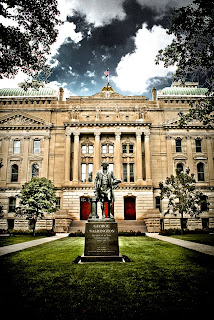
negative. It seemed that the more purist photographers reacted to the post-processing that I do on my photos in a more negative way because they saw it as less of photography and more of a multimedia art form.
Even with the negative comments though, those same people were able to see my talent in how I captured each image whether they preferred the processing or not. My stand on this is that whether you use filters or post-processing, you're still altering that original subject into the look that you are trying to portray.
I believe that to be a good photographer, you must have keen eye for detail and a since of which composition will work best. It's all about preference.
You recently launched an online gallery, Short and Sweet Photography, in tandem with a cousin of yours, who also delves into photography. How did that collaboration materialize? Do the two of you talk shop a lot?Shanna and I began working together in 2007 after we decided that our c
ombined love for photography could turn into something more. We have a similar eye and work well together, so we decided to start taking portrait photos and traveling around the state to find interesting places to photograph. Shanna and I constantly "talk shop" about photography. We are both very passionate and have similar goals to how we want our business to grow.
Have you ever had any of your work on display in a public or private gallery? Have you ever sold any of your work? If so, how is/was that experience? If not, do you envision yourself doing that soon?Shanna and I began selling our photos at the local Farmers Market two summers ago. From that, we began doing local art fairs and also displayed photos at local businesses. In 2009, we were asked to display our work at a local gallery in Noblesville with other local artists.
It is a wonderful opportunity for the many people who come across
the gallery to see my passion first hand. I have been fortunate enough to sell quite a few of my pieces at all of these places that we have opened shop. I tend to display photos of local places that people are familiar with and I think that is why they tend to sell.
 Here are some Web sites where you can find more of Jordan's photography:Jordan's homepage at Capture IndyJordan and Shanna's online Web site, "Short and Sweet Photography"


